

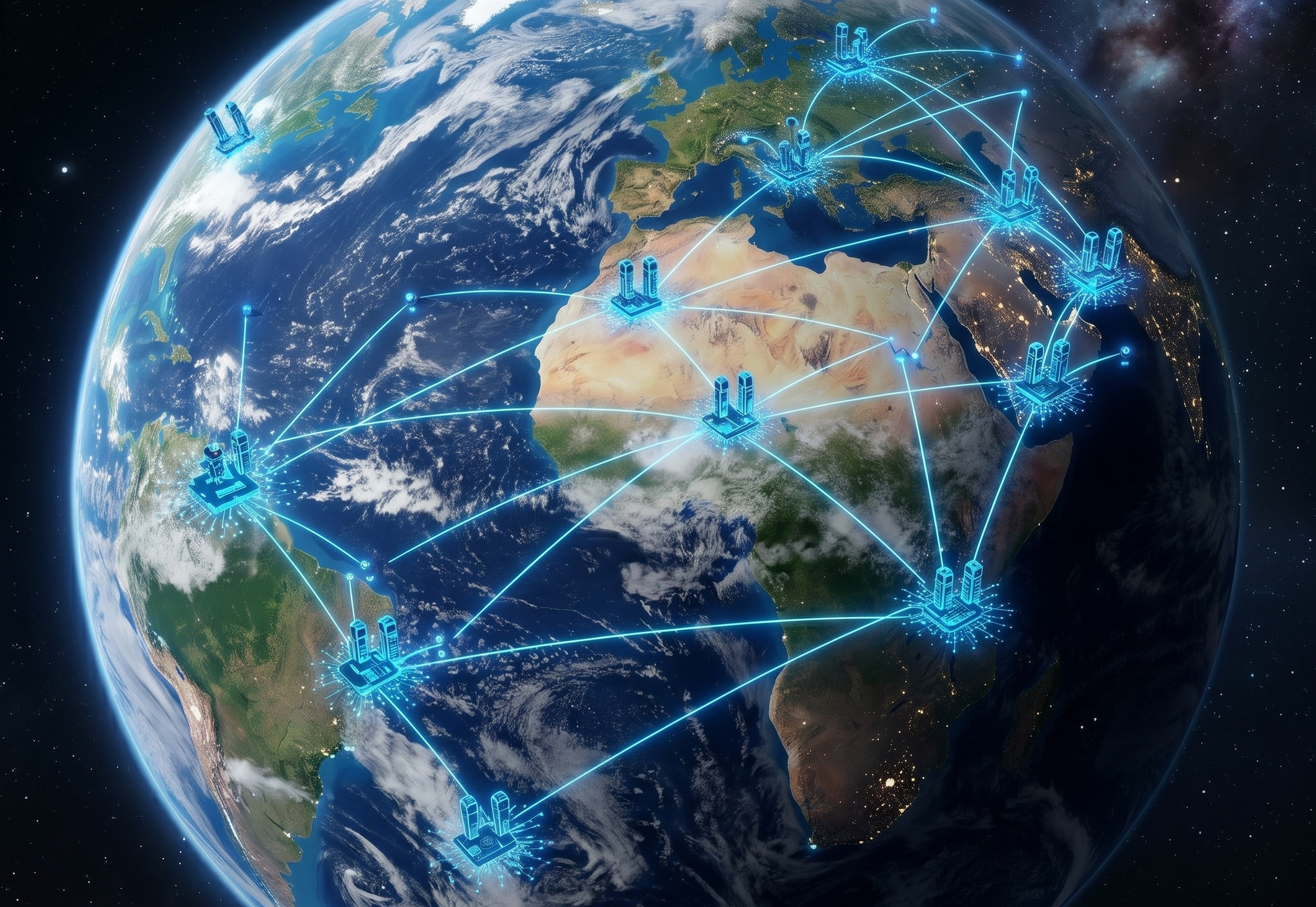
For two decades, global capability expansion followed one script: build large offshore teams, reduce costs, optimize headcount. It worked. Until it didn't.
The GCC ecosystem is now valued at over $600 billion globally, on track to approach $850–900 billion by 2030 (per industry research). But the growth story is no longer about scale alone. AI is the defining force reshaping how global capability models operate in 2026 — driving productivity while demanding a fundamental redesign of enterprise delivery structures.
The question boardrooms are asking has shifted.
It's no longer: "Where do we find lower-cost talent?"
It's now: "How do we build resilient, AI-native capability ecosystems — fast?"
From Cost Centre to Innovation Engine
The enterprises pulling ahead aren't building bigger GCCs. They're building smarter ones.
58% of GCCs are currently investing in Agentic AI, with another 29% planning to within a year — and reskilling initiatives have grown to 71% in 2025 (as per EY research). Capability, not just capacity, is the new competitive currency.
Industry data shows 86% of GCC leaders now prioritize service expansion, 77% operate in hybrid modes, and mature data and analytics practices are becoming standard — signalling a clear shift toward digital-first, AI-enabled operations.
The model is evolving: from operational support center → strategic enterprise capability hub. And the window to make that shift on your own terms is narrowing.
The Rise of the Nano ODC
Across the conversations we're having with enterprise leaders, a clear pattern is emerging: organizations no longer want to begin with massive offshore commitments, large upfront CAPEX, or rigid multi-year structures.
They want to start lean. Validate fast. Scale with confidence.
This is driving the rise of Nano ODCs — focused, AI-native capability nodes of 25–50 specialists, operational within 30–60 days, with embedded governance and a clear mandate. Not a smaller outsourcing team. A precision instrument for capability acceleration.
At Bajaj Tech.AI, we believe the new enterprise playbook is:
Nano ODC → Scaled ODC → GCC
Organizations that embrace this phased, outcome-driven approach are seeing faster innovation velocity, stronger operating leverage, and significantly lower transformation risk compared to traditional large-scale GCC builds.
What CXOs Need to Get Right in 2026
Three things will separate the GCCs that lead from those that lag:
1. AI leverage over headcount scale. IBM's own internal AI journey unlocked $4.5 billion in productivity gains by end-2025 — including a 90% reduction in finance cycle times*. Smaller, AI-enabled teams are now out-delivering what once required organizations several times their size.
*Source: IBM: Scaling without headcount: How GCC investors are redefining value creation through AI
2. Governance as a competitive advantage. The global AI governance market is growing at 34% CAGR, expected to reach nearly $6 billion by 2035 (as per industry research). GCCs that embed compliance-first, transparent operating models from day one earn the enterprise trust that drives expansion.
3. Speed to capability, not speed to headcount. The provider-supported GCC market is growing at ~25% CAGR, projected to reach $40 billion by 2027 (as per industry research). The enterprises winning aren't moving fastest on hiring — they're moving fastest on measurable outcomes.
The Bottom Line
The next generation of GCCs will not be defined by office footprint or labor arbitrage. They will be defined by AI leverage, innovation velocity, governance maturity, and business outcome ownership.
The AI-enabled GCC market alone is projected to reach $211 billion by 2032, growing at over 21% annually. The transformation has already begun.
At Bajaj Tech.AI, we partner with enterprises to design and build AI-native capability ecosystems — from Nano ODC launches to full GCC transformations — with governance-first operating models built for scale.
The enterprises that move now will build the operating leverage that's very hard to replicate later.
Rethinking your global capability model? Let's talk.