


Summary
A small finance bank running its platform on a legacy monolithic tech stack faced scalability constraints, prolonged release cycles, and mounting security risk. Bajaj Tech.AI led the bank's transition to a containerized architecture on AWS ECS, decomposing the monolith into independently deployable microservices. The result: a 40% reduction in costs, significantly faster deployment velocity, and a more resilient, fault-tolerant platform positioned to compete in a rapidly evolving fintech landscape.
Business Challenge
The bank's legacy monolithic architecture created six compounding problems:
- Scalability constraints impacting performance: Monolithic architecture restricts independent scaling of components, leading to performance bottlenecks whenever one part of the system faced disproportionate load.
- Prolonged release cycles: Changes in a monolithic system require full application redeployment, resulting in release cycles far longer than the business needed.
- Maintenance challenges compromising stability: Maintaining a monolithic architecture is costly, complex, and error-prone, complicating even routine upgrades.
- Security risk with the legacy system: Legacy systems frequently face challenges applying security patches, resulting in prolonged vulnerabilities that attackers can exploit.
- Knowledge gaps: Scarcity of resources with legacy system expertise impeded ongoing platform support.
- Limited innovation capacity: The tightly coupled nature of monolithic applications restricted the bank's ability to adopt new technologies, hindering its competitiveness in a rapidly evolving financial landscape.
Each of these problems reinforced the others, a system that was hard to change safely was also hard to secure quickly and hard to scale selectively, which is what made the case for a full architectural shift rather than incremental patching.
Solution Approach
Bajaj Tech.AI followed a structured modernization path spanning application analysis, containerization, and infrastructure setup on AWS.
- Application analysis: The existing monolithic application was evaluated by analyzing its architecture and dependencies, identifying key components and their interactions. The application was broken down into smaller components or services based on business functionality, with a comprehensive dependency map including libraries and external services built to guide subgrouping by architecture, functionality, and technology stack. Domain-driven design techniques helped define clear service boundaries.
- Containerization: A containerization and orchestration platform was selected based on technology stack and environment. Docker images were constructed for each application component, with proper encapsulation, vulnerability mitigation, and isolation. Multi-stage builds optimized image size and efficiency, images were cleaned of temporary files and unnecessary packages, and environment variables handled secrets and sensitive data rather than hardcoding them.
- Data management: Data management patterns, synchronization mechanisms, caching policies, and data integrity models were evaluated to ensure the new architecture handled data as reliably as the monolith had.
- Integration and interoperability: Strategies were defined for seamless integration between microservices and other systems, so the decomposed application still functioned as one coherent platform.
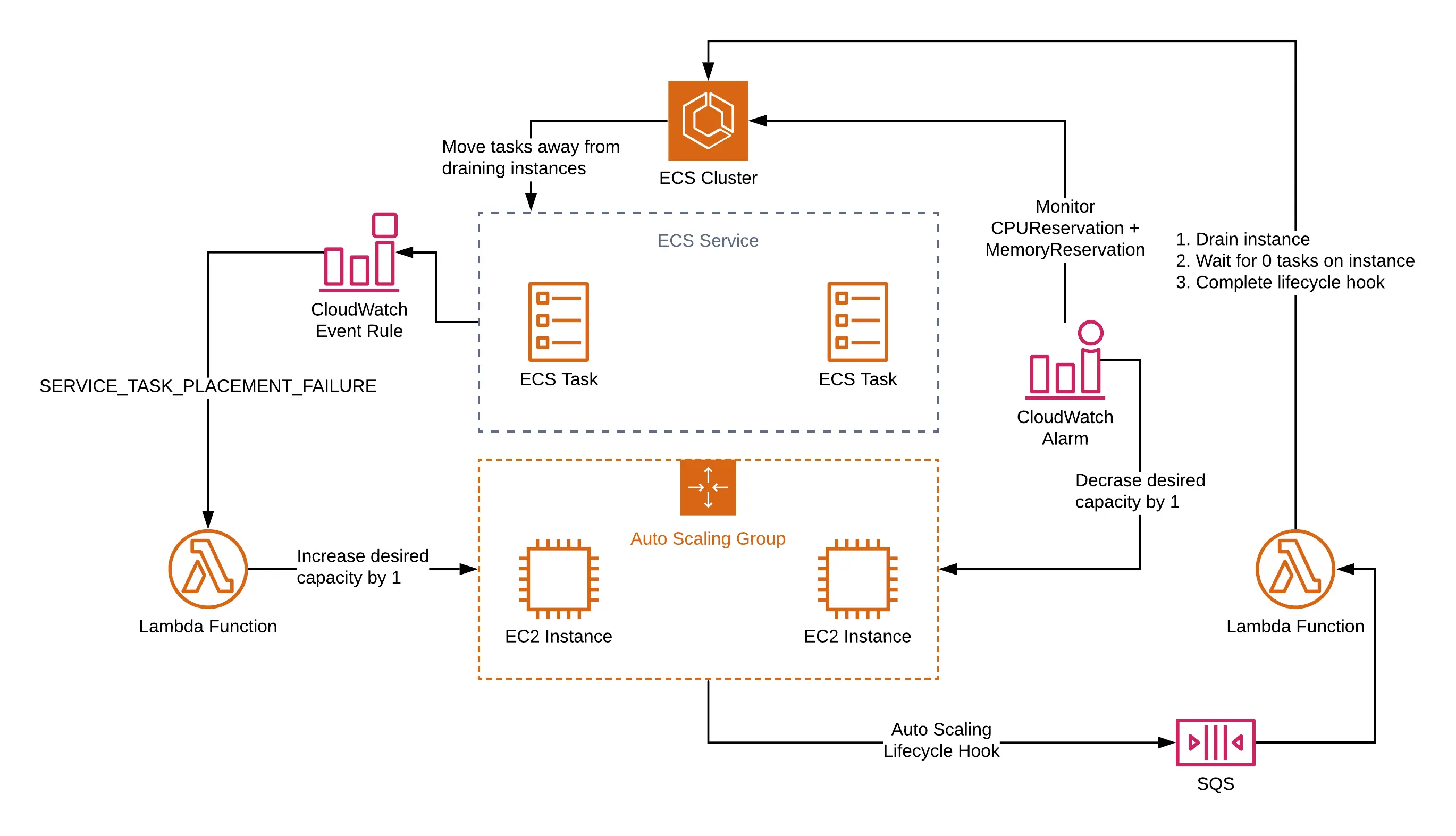
- Infrastructure setup on AWS: An ECS cluster was deployed using the EC2 launch type, with task placement strategies aligned to workload requirements. Service scaling was implemented based on CloudWatch metrics to maintain performance under varying traffic loads, AWS ALB distributed traffic evenly among containers, and IAM handled access control.
6. Compliance and security: The entire setup was made compliant with regulatory requirements, with security policies and controls deployed at every layer essential for a financial institution.
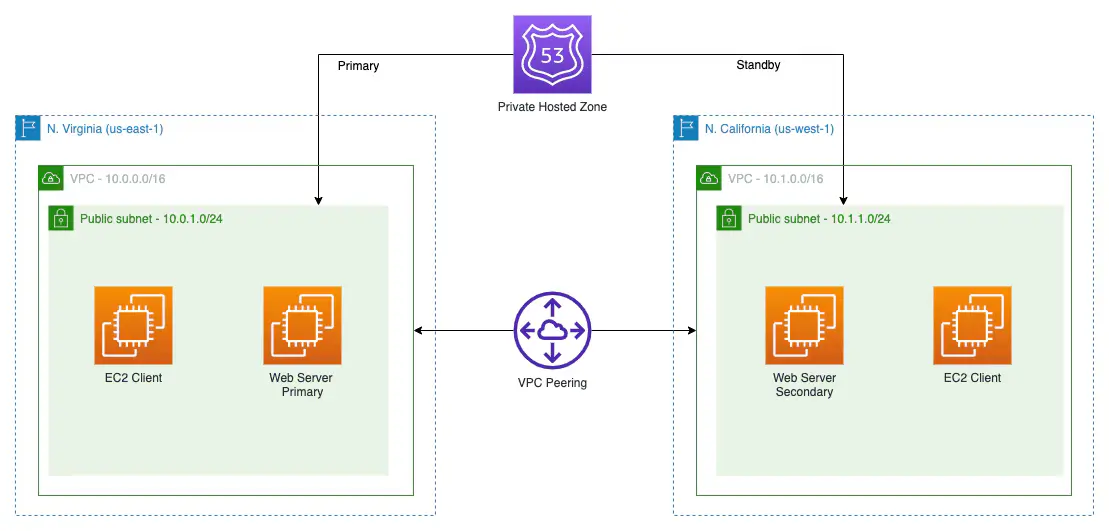
7. Deployments and Release Management:AWS ECS used weighted routing with Route 53 to implement canary releases, gradually shifting traffic from the “blue” environment to the “green” one, allowing real-time monitoring of a new version's performance. Automated deployments and infrastructure-as-code strategies enabled on-demand deployments, a DIY portal managed configurations and admin tasks across microservices, and logs and secrets management were externalized at the service level.
The order of these steps matters: application analysis and dependency mapping came before any containerization work started, which is what kept the decomposition aligned with actual business functionality rather than arbitrary technical boundaries.
Business Impact & Results
Migrating from a monolithic architecture to a Docker containerized deployment on AWS ECS using EC2 instances delivered a wide range of technical and business advantages.
- Independent microservices: The bank could decompose its existing monolithic application into discrete microservices, enabling independent development, testing, and deployment of each component.
- Consistency across environments: Docker created consistent container images ensuring uniformity across development, testing, and production environments eliminating a common source of “works on my machine” issues.
- 40% cost reduction: This solution achieved a remarkable 40% reduction in costs, in addition to its other operational benefits.
- Faster deployment velocity: With significantly increased deployment velocity, pushing major and minor changes to production as per business need became easier providing a genuine competitive advantage.
- Dynamic resource allocation: AWS ECS orchestration enabled service discovery, load balancing, and automated scaling based on real-time metrics, significantly enhancing the bank's operational efficiency and cost management.
- Enhanced fault tolerance: The isolation of microservices meant that if one service failed, it didn't compromise the entire application, a meaningful reliability improvement over the monolith.
This strategic shift aligned with the bank's objectives for a robust, scalable, cost-optimized, and resilient cloud platform, positioning it to better meet the demands of a competitive fintech landscape.
Key Takeaways
- Monolithic architecture compounds scalability, security, and innovation constraints together, rather than each existing independently
- Application analysis and dependency mapping should precede containerization, not follow it, to keep service boundaries aligned with real business functionality
- Canary releases via weighted Route 53 routing let a new version's performance be validated with real traffic before a full cutover
- Microservice isolation directly improves fault tolerance, a single service failure no longer threatens the entire application
- This kind of modernization pairs naturally with the high availability infrastructure and SRE practices Bajaj Tech.AI has built elsewhere
Conclusion
For this small finance bank, the shift from a legacy monolithic setup to a containerized fintech application on AWS ECS delivered a 40% cost reduction alongside significantly faster release cycles and stronger fault tolerance addressing scalability, security, and innovation constraints simultaneously. Financial institutions carrying similar legacy technical debt can draw a clear lesson from this engagement: modernization pays for itself when the containerization work is grounded in a genuine understanding of the existing application's dependencies, not just a lift-and-shift into containers.
This kind of cloud modernization complements Bajaj Tech.AI's cloud cost optimization and disaster recovery work in each case, the goal is a fintech platform that's both cost-efficient and resilient enough to meet regulatory and business demands.
Looking to modernize a legacy fintech platform? Connect with our experts to explore the right containerization strategy for your organization.







Email: info@bajajtechai.com
Ph. No.: +91 9049001579 (Mon to Sat - 9 am to 6 pm IST)
