


Summary
A leading Asset Management Company (AMC) was experiencing significant system load due to the vast volume of historical transactions, impacting overall performance. As transaction history accumulated year over year, database performance degraded in ways that affected everyone using the system, administrators and end-users alike, while the organization still needed full reporting access to that same historical data for compliance and audit purposes.
Bajaj Tech.AI implemented a strategic data archival solution using Salesforce Financial Services Cloud, archiving historical account transactions while ensuring critical transactional summaries remained readily available at the distributor, investor, and BIC (Business In Charge) levels improving system performance without sacrificing reporting or compliance access.
Business Challenge
The AMC faced four interconnected challenges in managing its growing volume of historical transaction data, challenges that pulled in opposing directions, since improving performance and preserving reporting completeness aren't naturally aligned goals:
- A large volume of historical account transactions needed to be archived to improve database performance and reduce storage costs
- Key transaction summaries were required at the distributor, investor, and BIC levels, ensuring continued reporting capabilities even after archival
- Archived data needed to remain accessible for reporting, particularly for regulatory and audit purposes, while maintaining data integrity
- Handling various transaction types: Lumpsum, SIP, Switch-in, Switch-out, added real complexity to the summarization and archival process
The core tension was straightforward to state but hard to solve: archive enough historical data to meaningfully improve performance, without losing the ability to answer a regulator's or auditor's question about any of it.
Solution Approach
Bajaj Tech.AI implemented Salesforce Financial Services Cloud to calculate transaction summaries before archival. The system processes data based on filters transaction type, account type to generate aggregated data such as minimum and maximum amounts, number of transactions, and inflows and outflows, giving each stakeholder level exactly the rollup figures they'd need without requiring access to the full historical detail underneath.
The solution leveraged Salesforce's external ID and upsert function to ensure efficient and reliable insertion or updating of summary data records meaning summary data could be kept current without duplicating records or requiring a full rebuild each time new transactions needed to be summarized.
The key design decision was summarizing before archiving, not after by the time historical detail moved into archival storage, every stakeholder that needed a rollup number already had one readily accessible.
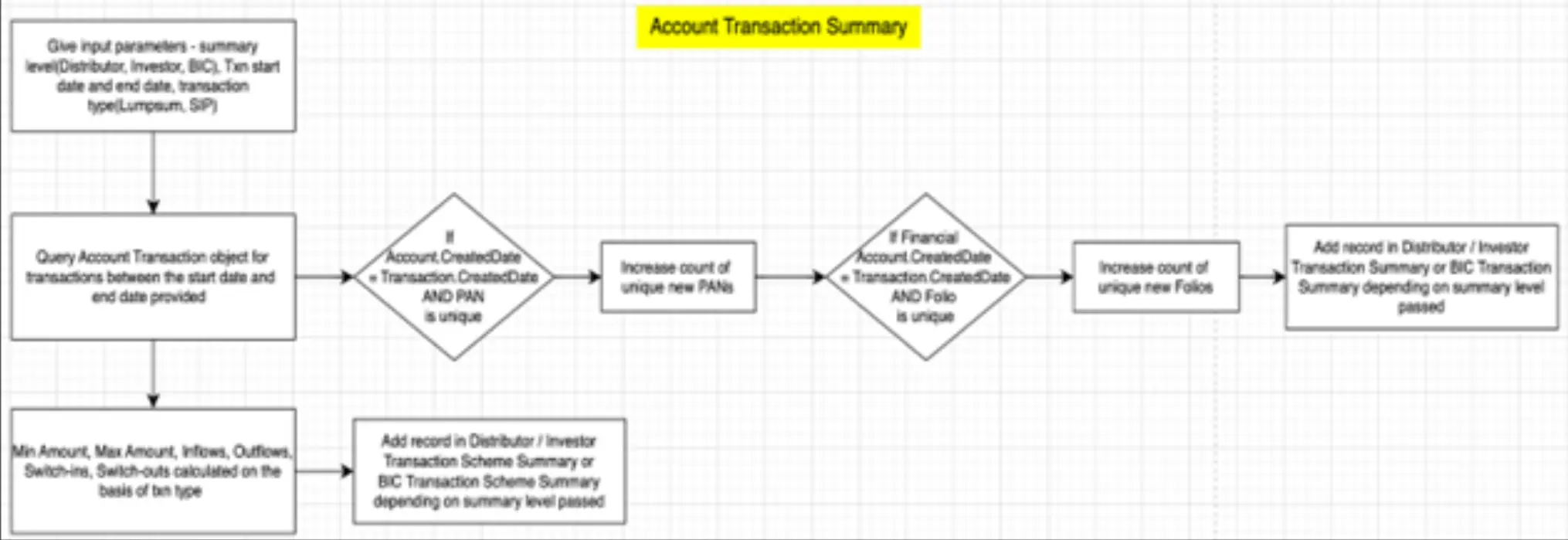
Fig.1 : End to end transaction summary flow
Business Impact & Results
The archival solution delivered improvement across performance, access, and consistency simultaneously rather than trading one off against another.
- Improved system performance: By archiving historic data and retaining only essential summaries, the system's performance and response time improved, providing a better experience for both administrators and end-users.
- Post-archival data access: The AMC can now access high-level transaction summaries even after detailed data has been archived, ensuring business users and stakeholders retain the critical information they need for reporting and compliance.
- Efficient data summarization: Batch jobs summarized large datasets efficiently, ensuring minimal disruption to ongoing business operations during the archival process.
- Consistency and accuracy: The automated process ensured transaction summaries remained consistent across multiple entities distributors, investors, and BIC improving reporting accuracy.
The result wasn't a trade-off between performance and reporting capability the AMC gained both simultaneously, because the summarization work was done upfront rather than as an afterthought.
Key Takeaways
- Archiving historical data safely requires generating durable summaries first, not archiving raw detail and hoping reporting still works afterward
- Salesforce's external ID and upsert capabilities allow summary records to stay current without duplication or full rebuilds
- Batch processing large historical datasets can be done with minimal disruption to ongoing business operations
- Regulatory and audit access requirements should shape an archival strategy from the start, not be retrofitted afterward
- This kind of data lifecycle discipline reflects the same CRM approach behind Bajaj Tech.AI's transaction mapping engagement
Conclusion
For this leading AMC, the transaction summary and data archival solution resolved a genuine tension between system performance and reporting completeness improving response times while keeping distributor, investor, and BIC-level summaries fully accessible for compliance and reporting purposes. Organizations sitting on a growing volume of historical transactional data can draw a direct lesson from this engagement: archival strategy and reporting strategy need to be designed together, not sequentially, or one will inevitably compromise the other.
This kind of CRM data lifecycle work complements Bajaj Tech.AI's transaction mapping and SIP registration follow-up engagements, in each case, the goal was preserving data integrity and accessibility while automating away manual overhead.
Looking to solve a similar business challenge? Connect with our experts to explore the right solution for your organization.







Email: info@bajajtechai.com
Ph. No.: +91 9049001579 (Mon to Sat - 9 am to 6 pm IST)
